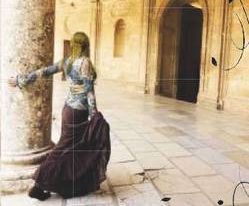
Tracey Warr, Almodis the Peacekeeper (Impress Books 2011)
A noble hostage living at Chateau de Montrueil-Bonnin with her beloved grandfather William V duke of Aquitaine and her unloving step-grandmother Agnes of Mâcon, Almodis de la Marche (1020-1071) has grown up estranged from her La Marche family, including her twin sister Raingarde.
Reunited at Chateau Narbonnais on the occasion of the investiture of Pons son of William Taillefer as 2nd count of Toulouse, she is determined to use the inside knowledge she has gained about the Aquitaines for the advancement of her kin, and she is more politically savvy than many of the men. In a time of warfare, a noble woman is supposed to be a ‘peaceweaver’. She is betrothed to Hugh V lord of Lusignan, Raingarde to Pierre Raymond of Carcassonne.
She finds her childhood friend Geoffrey the Hammerer of Anjou is less appealing as an adult, now married to her old foe Agnes and busily taking other people’s lands. Exercising her falcon, she is attracted to young Ramon (Berenger I), count of Barcelona. Perusing the books in the library, she meets Dia, a female troubadour, a trobairiz.
Hugh is gay, but she manages to squeeze three children out of him before being repudiated for an invented ‘consanguinity’. She marries Pons, unfortunately for her keener in the bed, and births Toulouses in quick succession. As Countess of Toulouse, still barely 20, she makes her mark as a capable châtelaine and ruler and establishes an enviable court. Newly widowed, Geoffrey, who is training her sons to be knights, makes a play for her affections, but she is loyal to Toulouse if not to Pons.
The youthful attraction between Ramon and Almodis is consummated in secret, and she falls pregnant. Now, her scheming to keep Pons from her bed works against her. Learning from a servant that Pons is planning to imprison her to marry an Aragonian princess, she flees to Ramon’s rescue (kidnap) and becomes Countess of Barcelona. But the pope considers this marriage adulterous and excommunicates them. As a ‘morning gift’ (given by the groom to the bride after the wedding night) he builds her a library.
When her sons come to battle over Aquitaine and when there’s a crisis of title succession to Carcassonne, Almodis again has to be the peaceweaver.
Shortly after this period came the Crusades and the Albigensian Crusade. Almodis’ story shows how these events were just part of the same pattern of territorial aggression by second and third noble sons.
In a society where nobles married several times in their lives (if not death, there was always real or imagined adultery or consanguinity to justify a desired repudiation), seeking more favourable alliances as their family rose, it was the women who handled the daily matters and the children. I enjoyed reading how Almodis handled her children’s jealousies.
Warr admirably and believably reads emotion and familial intrigue into the biographical data history has left us of these people. A sometime resident herself of Occitan, she pains a rich picture of a noble culture which was quite alien to the Capetian culture of the North, working in lovely details—eg. her first husband’s family suspects witchcraft because Almodis has birthed twins.
Almodis de La Marche was my ‘step granddaughter of step grandson of stepson of 4th cousin 31x removed’.
I also read Warr’s novel Daughter of the Last King (I lost my review before I could type it up) about Nest verch Rhys (my 20th great grand-aunt), daughter of Rhys ap Tewdwr, last king of Deheubarth. I liked Almodis better. Perhaps Nest had a less interesting life. But I think it was because Nest straddled the new world order between the Welsh and the conquering Normans, and this divided consciousness wasn’t examined as well as I would have liked. Contrastingly, Almodis is highly politically savvy. She plays the cards; she doesn’t have them played on her.
 Susie Helme
Leave a comment