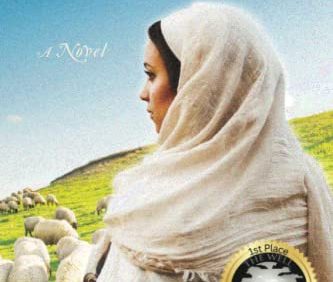
Anna Moore Bradfield, Legacy (Credo House Publishers 2023)
https://www.goodreads.com/book/show/123966296-legacy?ac=1&from_search=true&qid=HZpRSRJMyo&rank=2
11th century BC Bethlehem in the days of King Saul.
Eliab ben Jesse, a Benjaminite, scribe to the king and the most eligible bachelor in Bethlehem, espies the beautiful Nitzevet along the road and hopes that she is intended as his bride. Instead, his father Jesse marries the girl.
From a prosperous Ephraimite family, Nitzevet has to keep her wits about her while navigating her new family. Eliab pays his stepmother undue attention, and Jesse’s daughter Abigail is jealous.
When Nitzevet suffers a breach birth of her fourth child, midwifed by her Canaanite servant Rhea, it is her husband Jesse who, breaking religious taboos, delivers the stillborn babe to save his wife’s life. In her grief, Nitzevet, nicknamed Bet, sends for her cousin Peninnah, who is immediately attracted to Eliab. Bet’s fifth child is a girl.
Jesse is the grandson of Boaz and Ruth, a Moabite, and the legitimacy of that marriage was questionable, due to the Biblical injunction against marrying a Moabite convert. Jesse begins to doubt his own identity as an Israelite, and he shuns Bet’s bed. None of his sons seem inclined to take over the family’s sheep flock.
Bet and Rhea cook up a plan, to safeguard the legacy of the house, worthy of Jesse’s ancestresses.
Accusations of adultery, and worse, fly within the family. Bet tries to honour her husband while protecting her son, David. And we know the subsequent story of this boy—tends the sheep, plays the lyre, anointed by Samuel, kills Goliath, becomes king.
This is a fictional story woven around characters from the Old Testament, a great Concept. We’re talking about Late Bronze Age, here, and the period is portrayed well.
These Old Testament relationships are complex, offering rich possibilities for fictional biography. Biblical references are inevitable, as this is our only literary/historical source for these people, but they are handled awkwardly, put into the mouths of people who would have been so familiar with the stories as to not need repeating. In places the stories are repeated twice or even three times, which is unnecessary.
The characters often pronounce the name of ineffable YHWH, which would have been (and still is) utterly taboo. Instead, they would have referred to God as ‘Adonai’ (Lord) or by one of his epithets, Elohim, Shaddai, Tsevaot, etc. Rhea calls Bet by her full maiden name, Nitzevet bat Adel, which would have been considered very rude. I think she would most likely have called her ‘Gvéret’ (Madam).
 Susie Helme
Leave a comment