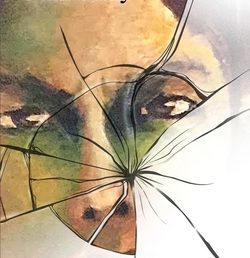
Sunil Sethy, Flitting in the Shadows (Notion Press 2021)
Husna’s mother and grandmother are killed in a car crash caused by two men lost in their desire. Husna was already prejudiced by her mother against gays, and this solidifies her antagonism. In her mum’s things she finds a manuscript addressed to her. Her boyfriend Adam helps her through it.
Part I deals with the manuscript’s revelations about Arvind’s family.
Arvind is accused by his friend Clive’s wife of a liaison with him, of which they are innocent, but he decides to own up to some things with his own wife Sushmita. This is the gist of the manuscript.
Manmohan and his pregnant wife Tillotama are fleeing from a massacre of Hindus and Sikhs in the Punjab.
Their young son Arvind is sexually molested by his uncle Shiv. He wets the bed, and is berated by his parents. But the relationship continues, to Arvind’s pleasure and his shame. Uncle Trilok has started molesting Arvind as well. He is rougher, threatening to tell Manmohan if Arvind doesn’t comply.
Part II deals with Sushmita’s family history.
Her wealthy mother Anjali marries the handsome Rakesh in a whirlwind romance, then when he leaves his father-in-law’s firm to take a lower paid job, she abandons him and their daughter and moved to New York.
Arvind and Sushmita marry despite their parents’ objections. Sushmita suffers two miscarriages, and they adopt a girl—we guessed it—Husna. Arvind feels neglected and has a string of liaisons.
Part III returns to the present day with Husna and Adam.
Husna, for some reason, concludes that Sushmita is a pseudonym for her mother Kalpana. This would make Arvind her father. No wonder her mother poisoned her against gays.
Husna and Adam travel to India, then to Australia in search of her father. They find out his real name is Sudhir Nanda, and he’s migrated to Australia and lives with Brian Murphy, whom Husna surmises is ‘Clive’ from the manuscript. Husna and Adam travel to Sydney, but the baggage of the past rears an ugly head, and the reunion is not as happy as it should have been. But there is a happy ending.
The writing style is good. There are a few spelling mistakes; in a few places names of characters are spelled differently, which is confusing, since we’re already handling so many characters. There are an awful lot of people to keep track of. The synopsis described it as a ‘family saga’ (which I love) so I was forewarned and kept a running list of characters and their relationships. The myriad characters are all rich and multi-faceted, and their lives complex. Their sagas also span several decades of an interesting period in India’s history, and by the end, we have learned so much about India.
Almost the whole novel consists of this manuscript Husna discovers, interspersed with brief chapters with Husna and Adam saying stuff to each other about it and Husna saying, ‘What does all this have to do with ME?’ While this may be a logical plot structure, it leaves the reader behind a bit. We are left wondering not only ‘what does this have to do with Husna?’ but ‘Wait, who was Husna, now? I was so engrossed in the Arvind and Sushmita saga, I forgot.’
The book reflects feelings common for people who have been adopted, unsure of their identity when they don’t know where they’ve come from. Of course, one is pained to read of the abuse of Arvind’s childhood. His later psychological sufferings may also be familiar to those with what is often mistakenly called ‘ambivalent sexuality’. So many people whose sexuality is more complex than just straight or just gay suffer from identity confusion, too. Marital infidelities of any sexuality still often cause too much pain to surmount. Modern-day people can read of these sufferings with sympathy, in hopes that one day, these confusions will no longer cause such suffering.
 Susie Helme
Leave a comment