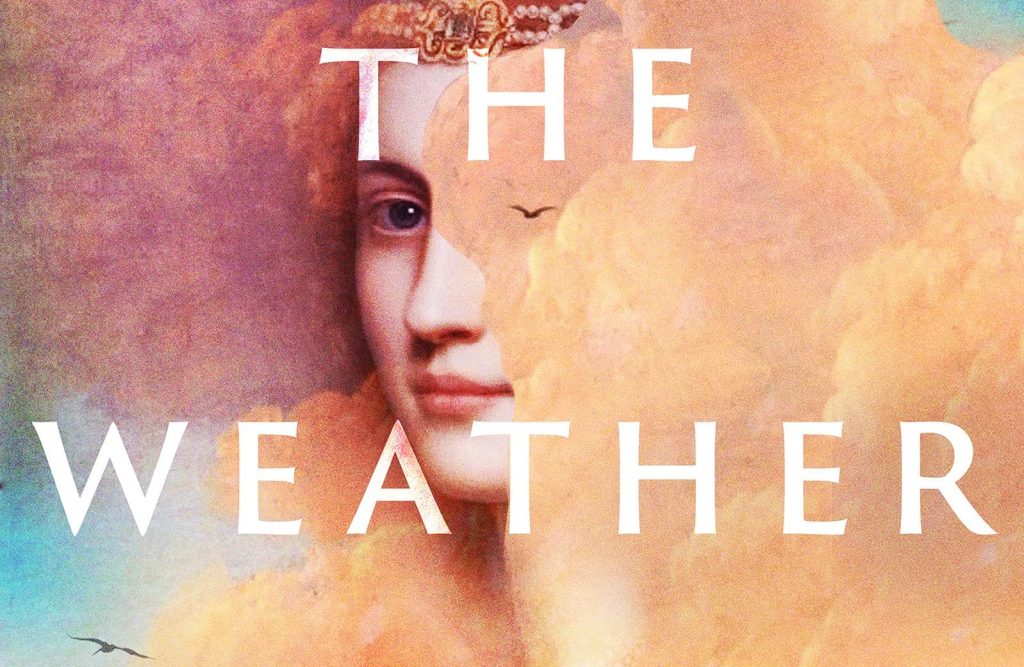
Sally Gardner, The Weather Woman (Head of Zeus 2022)
Russian girl Neva Friezland has a gift—she can predict the weather.
Regency England January 1789.The Thames is frozen over, and London is enjoying a winter Frost Fair. Three-year-old Neva mimics the sound of ice melting, but the adults don’t heed her warning. She can also read ‘the weather inside people’. Her mother, fiery red, and her father, ice-blue, fight constantly, and she lives in terror.
An accident kills her parents, and Neva takes up with clockmaker Victor Friezland, who also is Russian. She wears boy’s clothes, puts on blue-lensed spectacles, and calls herself Eugene Jonas. People are noticing that her predictions about the weather always come true. Victor fears for her safety and builds an automaton to have her speak though.
Neva meets Henri Dênou, Lord Wardell’s nephew, who gives her a shiny black pebble. Henri bets on her forecasts and wins. In the guise of Eugene Jonas, she goes to a club with Henri Dênou and has a whale of a time.
Though it’s not a comedy, there are errors of miscommunication and misunderstanding. Mix-ups arise when lovers don’t declare themselves, mix-ups which are complicated by them dressing up as the opposite gender. Letters remain unsent.
Victor’s death—and his surprising will—brings all the characters into conflict.
Any period would love to have a magic weather predicting machine, but there’s a quirky Regency feel to the story of Neva’s special power. This is a period when people were fascinated by magicians and mesmerism and when the provision of public entertainment for the masses was just beginning.
Modern readers can appreciate a tale of female empowerment, and there’s a climate change message in Neva’s predictions.
The early chapters, the three-year-old voice is very good; Neva’s voice is strong throughout. The interplay between characters is full of love, jealousy, greed, skulduggery.
This review first appeared in Historical Novels Review.
 Susie Helme
Leave a comment