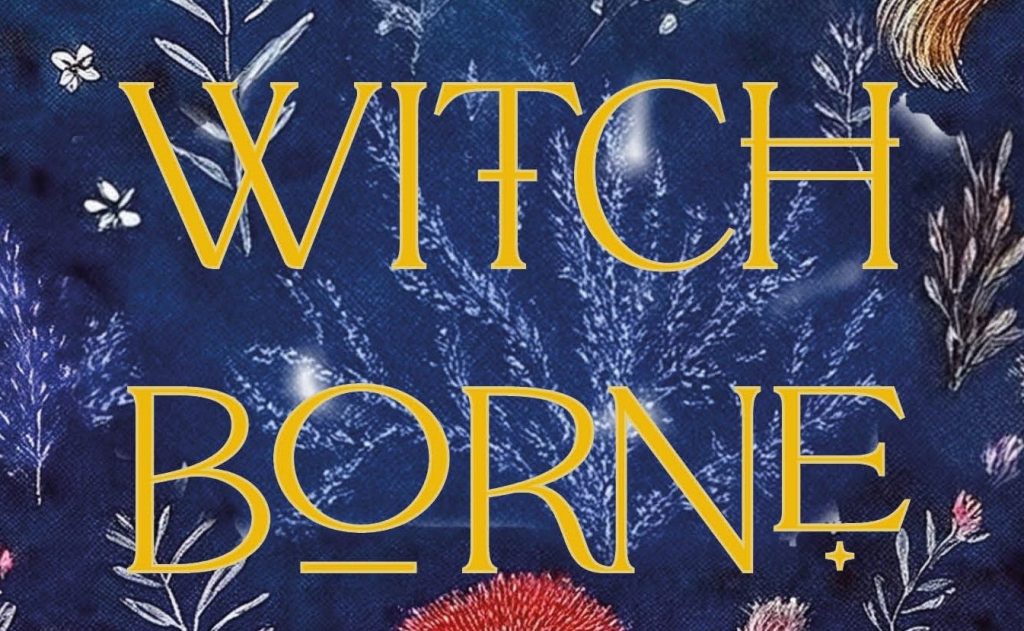
Rachel Grosvenor, Witchborne (Fly on the Wall Press 2025)
https://www.goodreads.com/book/show/230752566-witchborne
Woman’s inhumanity to woman—with special powers
Because she is a child of spring, blacksmith’s daughter Agnes has a special power bestowed upon her at birth—fire does not burn her. But those around her don’t see it as special—they think she’s a witch. Even her mother thinks it’s ‘an affliction’. She pretends that her gift is instead the less magical ability to bind water in a bucket.
Something calls to her. ‘Agnes’.
The local beauty Saskia, against whom she is always compared, teases her.
Against her will, Agnes is betrothed to the tanner’s son. She rebels by pulling a stunt at the wedding, which no one finds amusing. She enters into a loveless marriage with Silo and now always smells of urine, upon which everyone remarks numerous times.
To win everyone’s approval, she must have a son. So, she goes to a local cunning woman the Widow Sewall and makes a pact. The Widow warns that ‘to play the Gods’ one has ‘to bargain for the ever after’.
Everything Agnes does seems to make things worse for her, and the blessing of a son doesn’t change that. The rivalry between Agnes and Saskia affects their babies, and Agnes increasingly hides herself away to avoid retribution. Toward the denouement, there are some twists in the tale, and we find out that previous generations have also made bargains and been shunned. Agnes’ desire to be accepted by her family clashes with the pact she made with the Widow.
Surprisingly, Agnes’ magic power doesn’t much come into the story; it’s mostly about her unhappiness and her rivalry with Saskia.
This is a fictional mediaeval world, verging on fantasy, yet it abides by societal rules familiar to our history. Conformity is expected, women are subservient, witchcraft is feared, and rumours kill. The cycle of ‘woman’s inhumanity to woman’ continues.
The review first appeared in Historical Novels Review.
 Susie Helme
Leave a comment