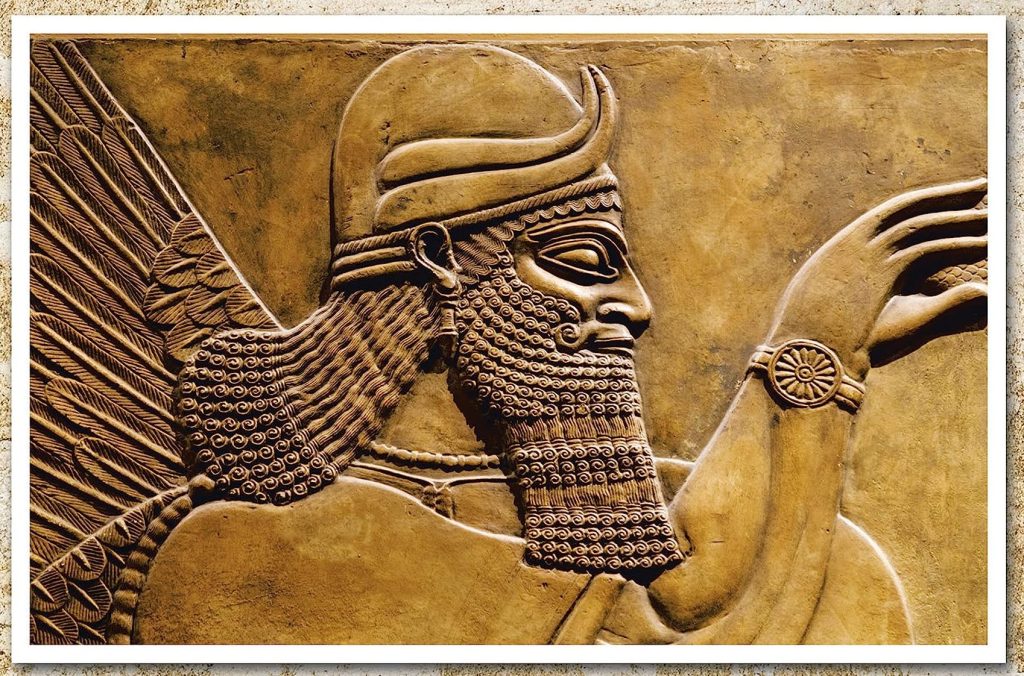
Adamos Zagara, Man, God, and the Man-gods of Antiquity (Archway Publishing 2023)
Hominids knuckle-dusted around for millions of years; then, comparatively suddenly, towns and civilisations appeared. Were the heroes in the Sumerian and Egyptian kings lists descendants of gods?
As early as 5500 BCE in Mesopotamia, we began writing down creation stories, but they had been circulating orally for 1000s of years before that. The ancient ‘temple’ of Gobekli Tepe dates to at least 9000-9500 BCE. Why didn’t we write stuff down then?
There were stories of a Great Flood. We know there was big one around 12,500 years ago when a sharp rise in global temperature melted ice caps (Zagara wrongly places the Biblical flood here—the Biblical flood dates more recently than that, probably 3600 BCE), with another dramatic global warming around 14,700 years ago. Hominids struggled during the intervening cold Younger Dryas Period, but they did not go extinct.
Where is all this leading? By about page 28 I figured where we were headed: 6000-12000 years ago God meddled with our DNA, or it was aliens.
The cited evidence reveals a metaphysical idealism approach, comparing dates of civilisation with dates of flood stories, yet neglecting to compare them with dates of agriculture, metallurgy.
Zagara says that the Sumerians had it right. Man was created ‘to serve the gods’, neglecting to mention that that was what defined human to human relations back then.
I agree with him on one point. The stories of ‘giants’ at the time of Noah could be our ancestors’ cultural memories of Neanderthals, who, yes, genetic research has proven, did mate with the daughters of men. And I am still attracted to the notion that pyramids were some kind of power-generating devices.
A global catastrophe—such as an asteroid hitting earth, a supervolcano eruption—could happen tomorrow. Will we be ready? Will we ever see God?
I love ancient history conspiracy theories, but for me, they need to be a bit better researched. There are all sorts of mysteries of the ancient world that are still unsolved, but it’s much more interesting to search for scientific explanations.
 Susie Helme
Leave a comment