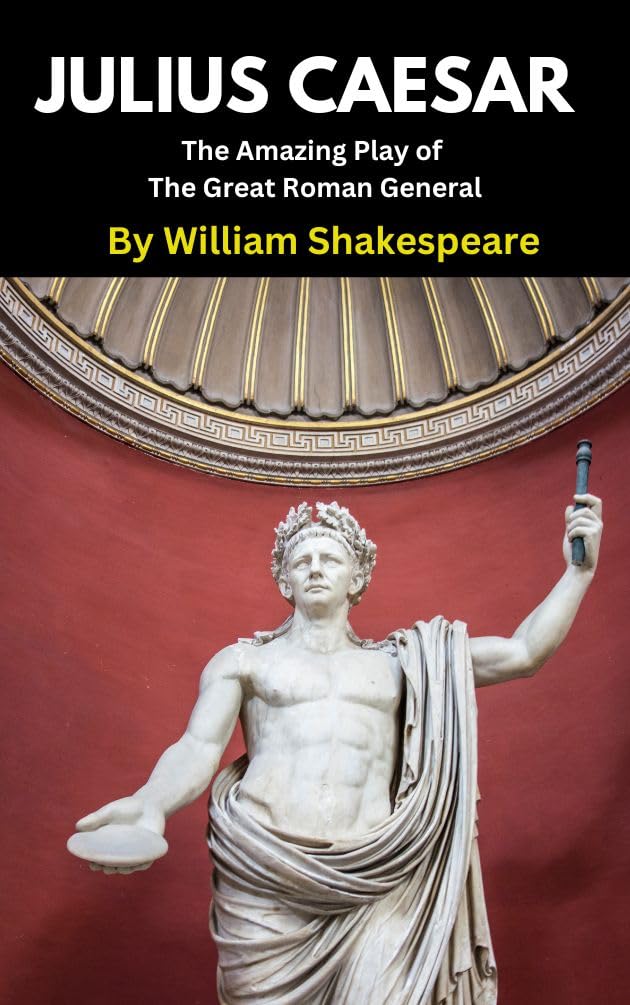
William Shakespeare, Julius Caesar: The Amazing Play of The Great Roman General (Kindle 2023)
Rereading a classic masterpiece screenplay
https://www.goodreads.com/book/show/203879797-julius-caesar
I’m a big fan of Shakespeare—who isn’t? But not all of us loved learning it in school. I did, and Julius Caesar was always my favourite. I loved discovering the meaning behind antiquated language and appreciating the timeless plays on words.
It’s based on real history, with which we are all familiar. It features rich interesting characters—Brutus in particular, who is conflicted, torn between his love and respect for Caesar and his devotion to the idea that Rome must have no king.
And it’s chock full of great lines. We all know the ‘Friends, Romans, Countrymen, lend me your ears. I come to bury Caesar, not to praise him’ speech, but that’s not by any means the only memorable one. Immortal lines include: ‘the fault, dear Brutus, is not in our stars, but in ourselves’, ‘cowards die many times before their deaths; the valiant never taste of death but once’, ‘cry havoc, and let slip the dogs of war’, ‘et tu, Brute? Then fall, Caesar’, ‘I am constant as the Northern Star’, ‘the evil that men do lives after them, the good is oft interred with their bones’. And lesser known ones: ‘dwell I but in the suburbs of your good pleasure?’, ‘let us bathe our hands in Caesar’s blood, up to the elbows’, ‘whilst your purpled hands do reek and smoke’, oh, what a fall was there’, ‘this was the most unkindest cut of all’, ‘here was a Caesar, when comes such another?’, ‘mischief, thou art afoot’, there is a tide in the affairs of men’, ‘the elements so mixed in him that Nature might stand up and say to all the world, this was a man’.
This is one of Shakespeare’s tragedies—not a comedy—and yet it’s full of witty puns that are still as funny as they were in Elizabethan days and humorous turns of phrase so gorgeous in their wordiness as only Shakespeare can do. Antony’s funeral speech is a masterclass in oratory (‘sweet friends, let me not stir you up to such a sudden flood of mutiny’), the repetition of ‘and Brutus is an honourable man’ digs the cut over and over.
I have never understood why this play is not much performed. In contrast, Romeo and Juliet, my second favourite, has a new performance every few years.
One drawback to reading the play verbatim is that you don’t have the CliffNotes at the side explaining every little thing. I needed those when I was in primary school, but I’m educated enough and familiar enough with Shakespearean language not now to need them.
The challenge to actors in learning their long lines of complex monologue is balanced by the prestige of playing Shakespeare.
In conjunction with rereading this classic masterpiece, I watched the 2014 Theatre Classics film of the play on YouTube. Thus, I managed to catch every word and every nuance.
 Susie Helme
Leave a comment